
Introduction
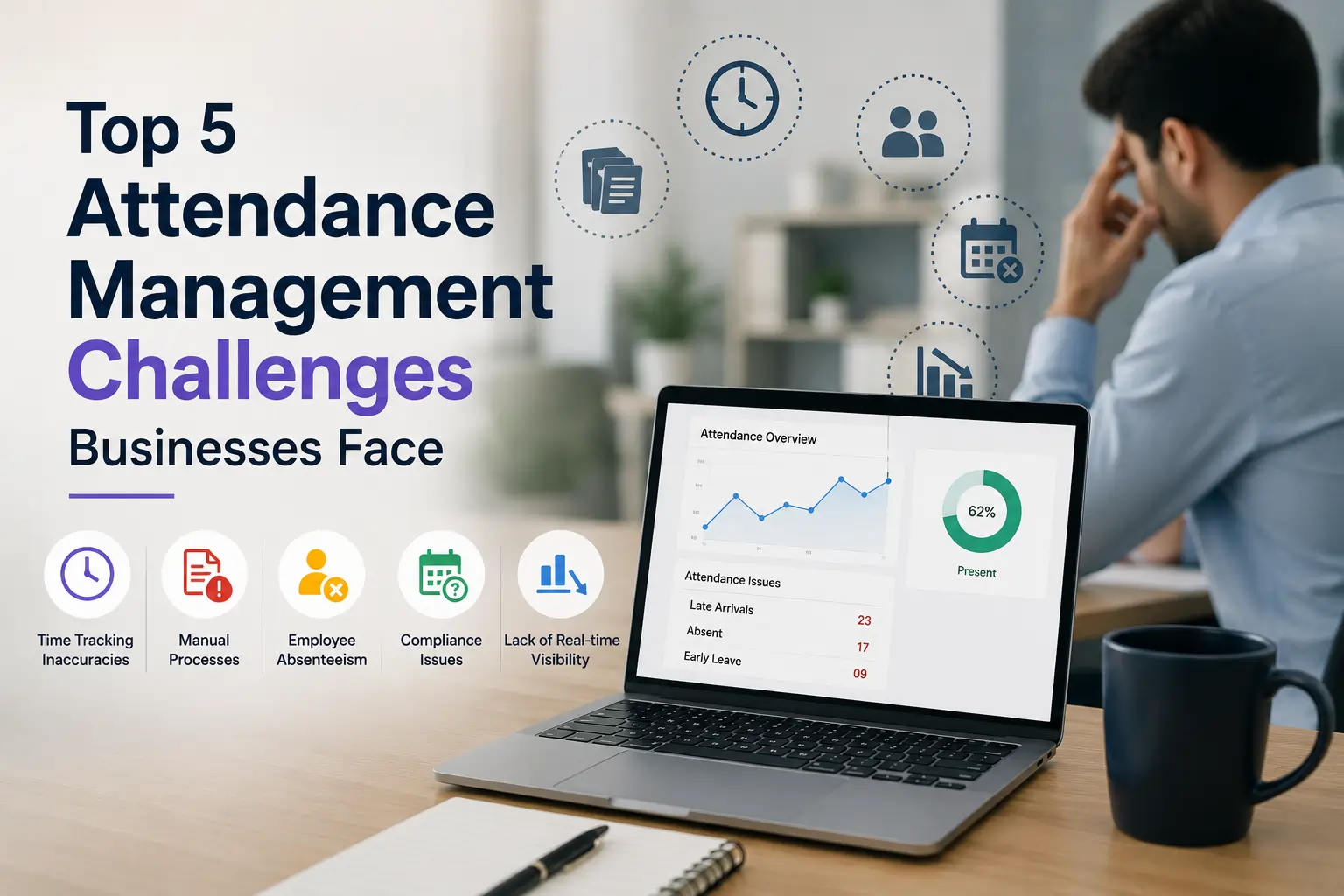
Employee attendance management is one of the most important parts of running a productive business. However, many companies still struggle with outdated processes, inaccurate records, and inefficient workforce tracking.
As teams become larger and more distributed, attendance management challenges can directly affect productivity, payroll accuracy, and employee accountability.
Understanding these common challenges can help businesses build smarter systems and improve workforce operations.
1. Manual Attendance Errors
Traditional attendance methods like paper registers or spreadsheets are highly prone to human error. Incorrect entries, missed check-ins, and duplicate records often create confusion during payroll processing.
These mistakes can reduce employee trust and increase HR workload.
2. Difficulty Managing Remote Employees
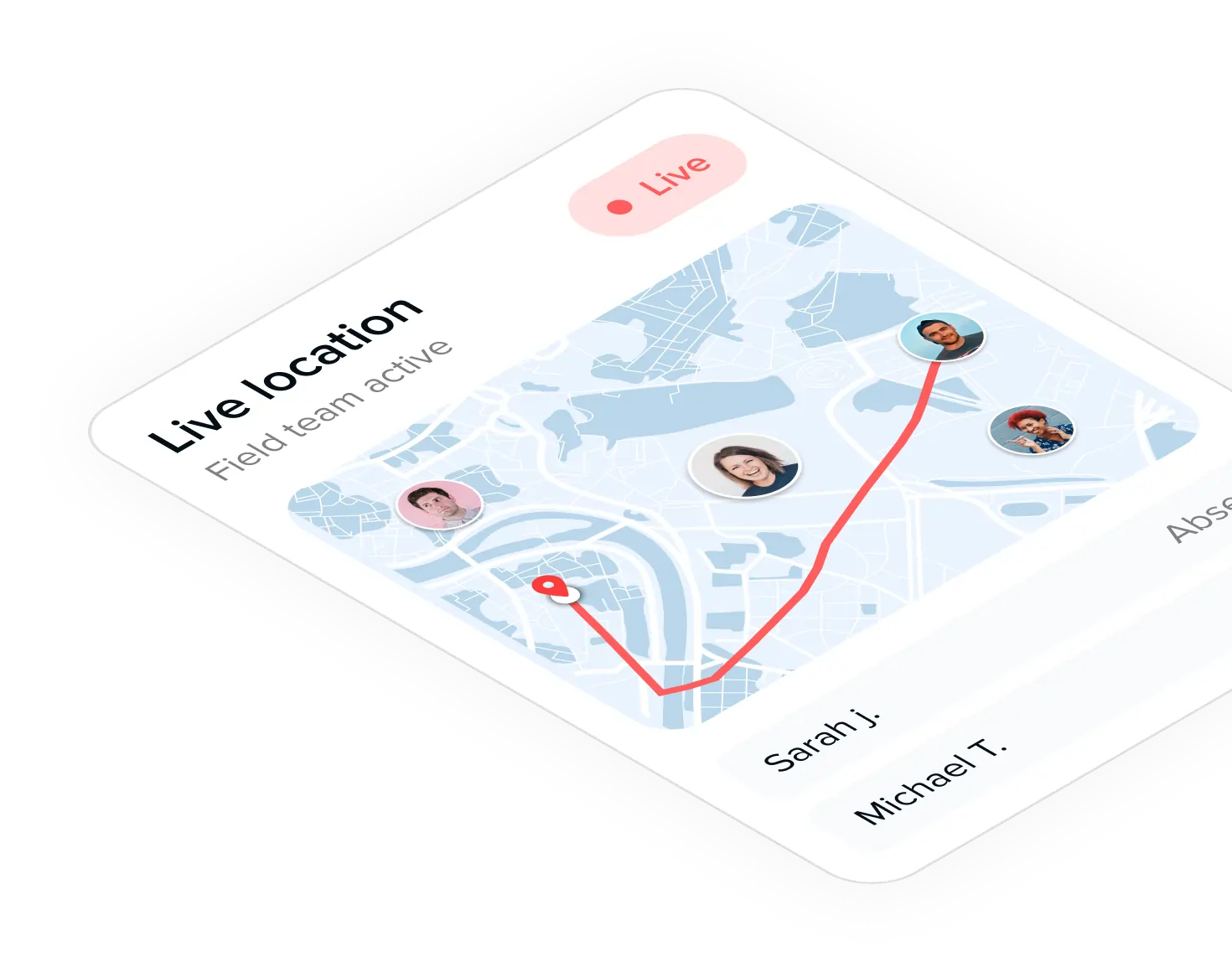
With remote and hybrid work becoming common, businesses often struggle to track employee attendance accurately outside the office.
Without proper systems, managers may lack visibility into employee working hours, productivity, and task accountability.
3. Time-Consuming Payroll Processing
Attendance data directly impacts salary calculations, overtime, and leave management.
When attendance records are scattered across multiple systems, HR teams spend unnecessary hours calculating payroll manually.
4. Lack of Real-Time Visibility
Many businesses cannot monitor attendance trends in real time. This delays decision-making and prevents managers from identifying issues like absenteeism, late arrivals, or workforce shortages quickly.
Real-time reporting is essential for smooth daily operations.
5. Attendance Fraud & Buddy Punching
Inaccurate attendance practices like buddy punching can lead to productivity losses and payroll leakage.
Modern attendance systems with mobile tracking, biometric verification, or GPS-based check-ins help businesses prevent fraudulent attendance activities.
How Digital Attendance Solutions Help
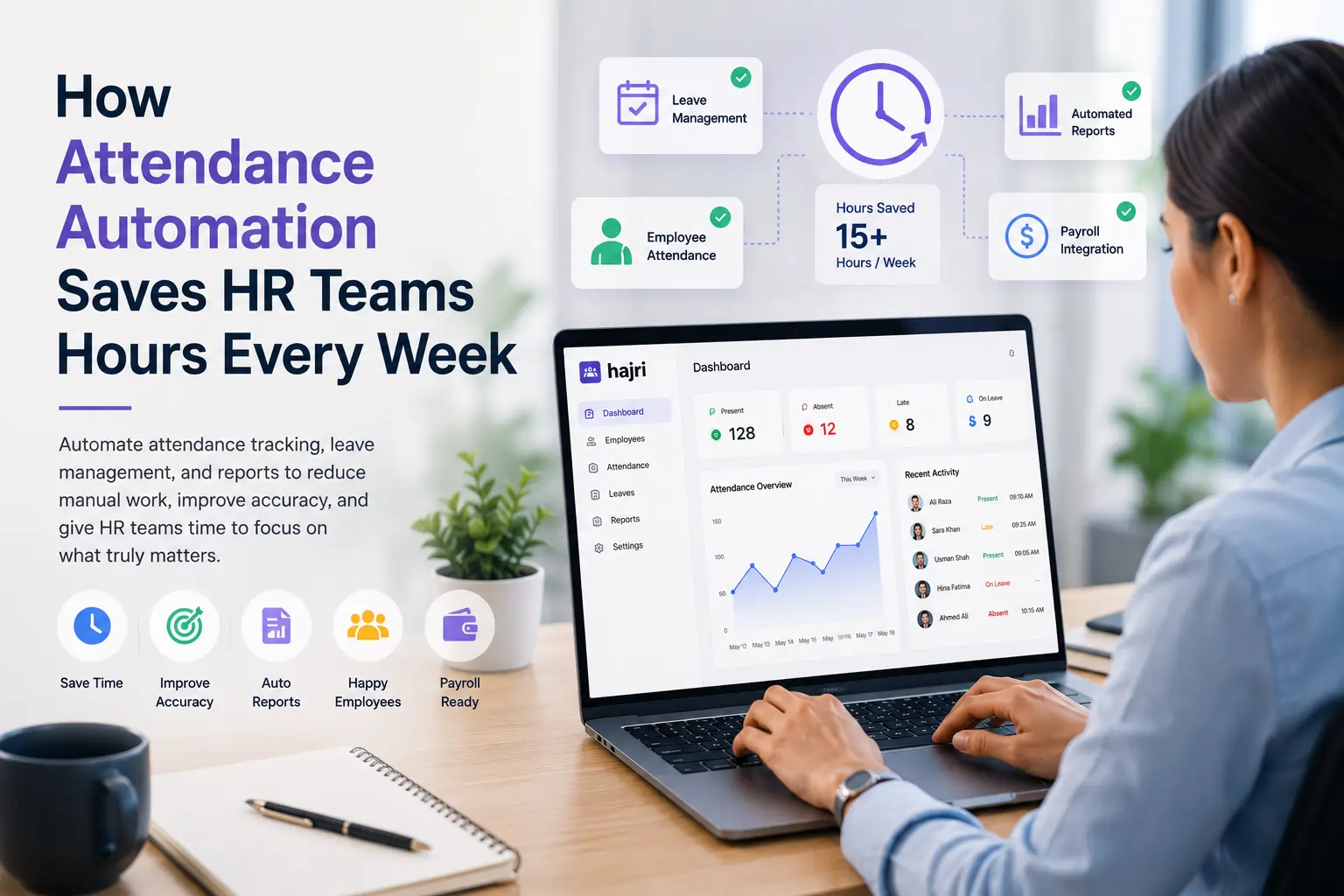
Smart attendance platforms simplify workforce management by automating daily attendance operations.
Businesses can:
- Track employee attendance in real time
- Automate payroll-ready reports
- Manage remote employees efficiently
- Reduce manual HR work
- Improve accountability and transparency
Digital systems help organizations save time while improving operational efficiency.
Why Businesses Choose Hajri
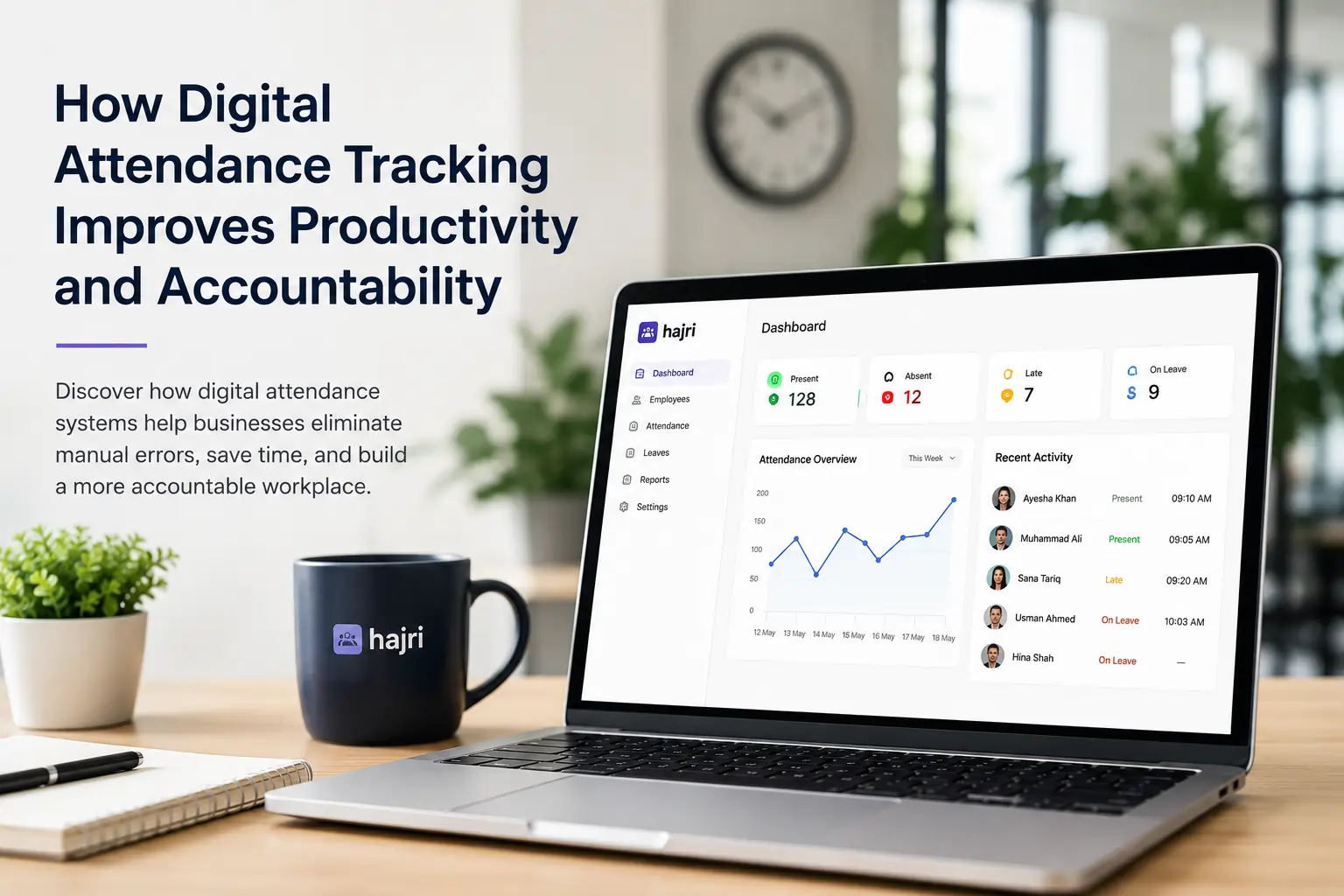
Hajri provides modern attendance and employee management tools designed for growing businesses.
With features like:
- Mobile attendance tracking
- Leave management
- Employee monitoring
- Real-time dashboards
- Payroll integration support
- Attendance analytics
Businesses can manage teams more efficiently while reducing administrative workload.
Final Thoughts
Attendance management is more than simply tracking employee check-ins. It plays a major role in productivity, payroll accuracy, and operational success.
By identifying common attendance challenges and adopting modern digital solutions, businesses can build more efficient, transparent, and accountable workplaces.